Bristol Bay Fishing Season Calendar: When to Catch Every Species, Month by Month
If you're planning an Alaska fishing trip, the question that decides everything else is simple: when should you go? The answer depends entirely on what you want to catch. Bristol Bay's rivers — including our home water on the Naknek River — run through one of the most productive wild fisheries on earth, but each species has its own window, and those windows don't all overlap.
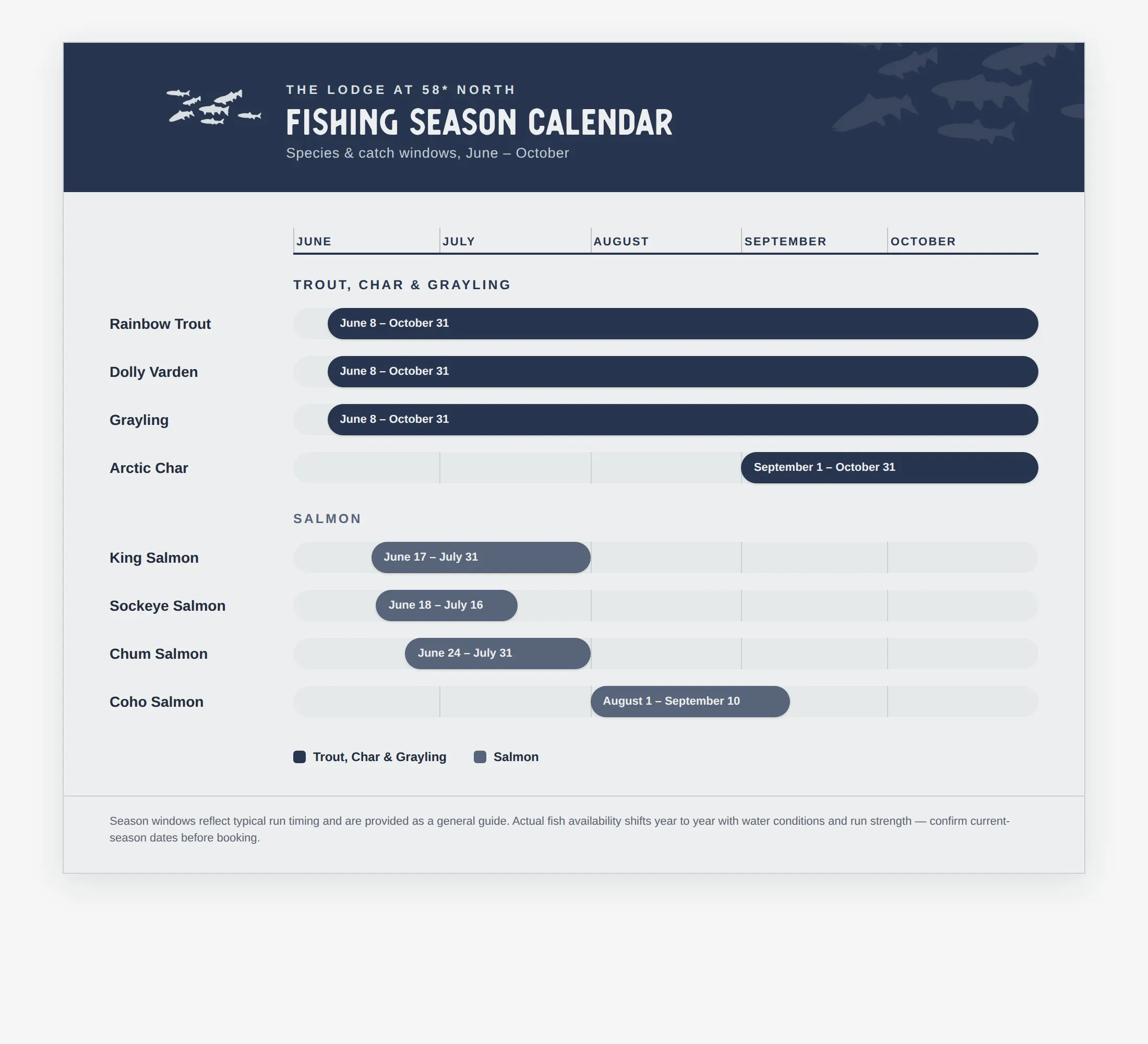
We built the calendar below to make that easy to see at a glance. It maps out the season for every species we target at The Lodge at 58 North, from the first king salmon of June through the last Arctic char of October.
How to read the calendar
Each bar shows the typical run window for that species on Bristol Bay waters — not a guarantee, but a reliable guide based on the timing we see year after year. Trout, char, and grayling are grouped separately from the five salmon runs, since they behave differently: the salmon windows are tighter and driven by spawning migrations, while rainbow trout, Dolly Varden, and Arctic char fishing is shaped more by when the salmon (and their eggs) are in the system.
Salmon season in Bristol Bay: the short answer
Bristol Bay is famous for good reason — it's home to the largest sockeye salmon run on the planet, and all five Pacific salmon species pass through the same waters in a single season. Here's how they stack up:
King salmon (Chinook): June 17 – July 31. The first salmon of the year and the one most anglers plan a whole trip around. Kings show up in mid-June and the run holds through July, with the sweet spot typically falling in the last two weeks of June and first week of July.
Sockeye salmon: June 18 – July 16. Sockeye run hard and fast — a shorter window than any other species here, but Bristol Bay's runs are so massive that "short" still means weeks of extraordinary fishing. If your trip is built around sockeye, late June is the target.
Chum salmon: June 24 – July 31. Chum overlap almost entirely with the back half of the king run, making late June and July a stretch where three salmon species can be in the river at once.
Coho salmon (silvers): August 1 – September 10. Coho arrive right as the early runs taper off, giving Bristol Bay a genuine second salmon season. Many anglers consider coho the best fly-rod salmon of the year — aggressive, acrobatic, and willing to chase a swung fly.
Chinook, sockeye, and chum overlap in late June and early July, which is why that stretch is the most heavily booked window of the season.
Trout, char & grayling: the resident fishery
Unlike salmon, these species don't leave — they're in the system year-round, but the fishing gets progressively better as the season goes on:
Rainbow trout: June 8 – October 31. Bristol Bay's rainbows are in the river all season, but timing changes the game they play. Early-season trout key on emerging salmon smolt and insects; by fall, they're gorging on the eggs and decaying flesh from the salmon spawn, which is when the biggest fish of the year show up.
Dolly Varden: June 8 – October 31. One of the most underrated fisheries in Bristol Bay. Dollies follow the same egg-and-flesh pattern as rainbows and fish exceptionally well from late summer into fall.
Grayling: June 8 – October 31. A dry-fly angler's favorite. Grayling fishing is best earlier in the season, before the water cools and the fish shift focus toward the salmon spawn.
Arctic char: September 1 – October 31. The last species to turn on and the one that defines the fall season. Arctic char move into prime water right as the salmon runs wind down, making September and October the months to target them.
Best time to visit for a mixed-species trip
Because the calendar above overlaps so much, timing your trip is really a question of priorities:
Late June into mid-July is peak season for anglers who want a shot at multiple salmon species (king, sockeye, and chum together) alongside solid rainbow trout and grayling fishing.
Late August through September is the sweet spot for coho salmon, with rainbow trout and Dolly Varden fishing building toward its best stretch of the year.
Late September into October is fall fishing at its finest — Arctic char come into their own, and resident trout and char are keyed in on the salmon spawn, which tends to produce the biggest fish of the season.
There's no wrong time to fish Bristol Bay. There's only the right time for what you're after.
Plan your trip
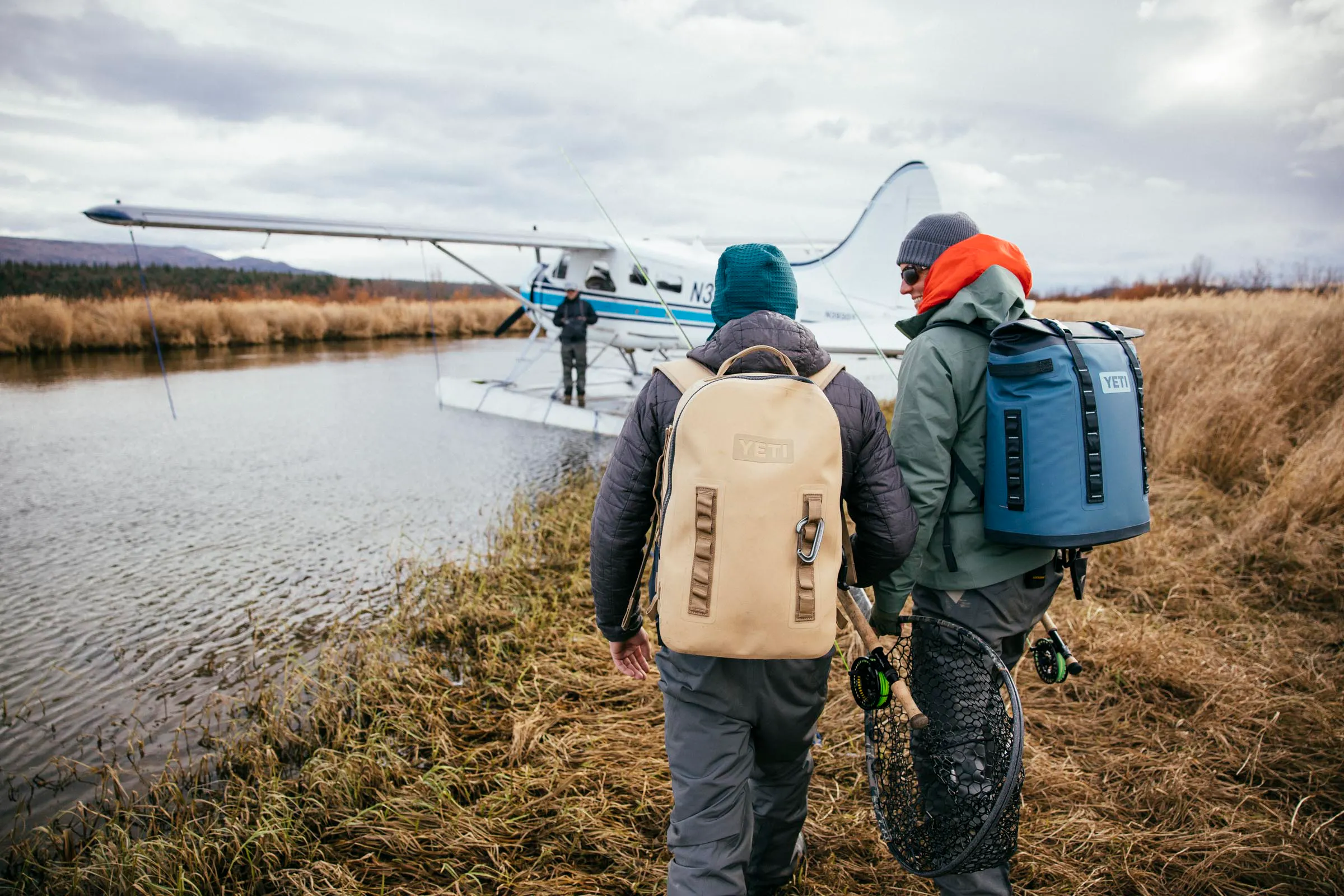
Every one of these windows plays out on the water we fish every day — the Naknek River as home water, with float plane fly-outs into Katmai National Park and the Becharof Wildlife Refuge when a different river or a different bite calls for it. Our guides track these runs in real time, so trip timing recommendations are always current, not just seasonal averages.
Frequently asked questions
When is king salmon season in Bristol Bay, Alaska? King salmon typically run from mid-June through the end of July, with the strongest fishing usually falling in the last two weeks of June into early July.
What's the best month to fish Bristol Bay? It depends on target species. Late June through mid-July is best for king, sockeye, and chum salmon together. August and September are best for coho salmon. September and October are best for Arctic char and trophy rainbow trout.
When do sockeye salmon run in Bristol Bay? Sockeye run from roughly June 18 through July 16 — one of the shortest windows of any species here, but Bristol Bay's run size is the largest in the world.
Is fall a good time to fish Bristol Bay? Yes — fall (September and October) is prime time for Arctic char and often produces the biggest rainbow trout of the season, as resident fish feed heavily on salmon eggs and flesh from the spawn.
Do all five Pacific salmon species run in Bristol Bay? Yes. King (Chinook), sockeye, chum, coho, and pink salmon all run through Bristol Bay waters, though pink salmon run on an every-other-year cycle in most systems.
Bristol Bay, Alaska
541 743 1255Join Our Mailing List


Join Our Mailing List